
By Paolo Falconio * –
The analysis presents Iran as a node of global strategic interdiction, rather than a mere regional actor. The regime’s internal crisis—marked by widespread protests, the breakdown of the social contract, hesitation within the armed forces, and the closure of the bazaars—signals a possible systemic collapse. The author anticipates the emergence of a “Bonaparte” figure from within, rather than a restoration of the Shah.
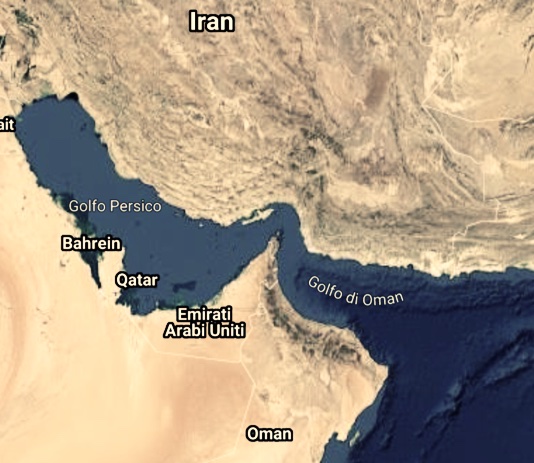
The global dimension of the crisis stems from Iran’s energy role: Persian oil accounts for 13–14% of China’s imports, a share that cannot be replaced. Control over the Strait of Hormuz (through which 20–25% of the world’s oil passes) grants Tehran a form of systemic interdiction leverage that transcends regional boundaries.
The boldest hypothesis is the emergence of a potential U.S.–Russia energy duopoly aimed at marginalizing other actors and undermining China’s energy dependence. This raises a crucial question: will China accept a “slow asphyxiation,” or will it respond with escalation (including de-dollarization)?
Conclusion: there are no longer “regional crises,” only nodes within an interconnected complex system. If regime change in Iran were pursued as a means to strangle China (rather than merely contain Iran regionally), the risk of great-power conflict would become tangible, turning a local uprising into a potential global detonator.
While Iran’s internal situation is marked by outbreaks of revolt against the regime embodied by Khamenei, some analysts have correctly noted that we are witnessing the end of the Islamic Republic’s historical function. Others, in my view equally correctly, raise the question of whether a clear and overt external intervention at this stage might instead recompact the masses of a nation that possesses an imperial spirit and an identity it has never lost, thereby effectively strengthening the existing power enclave.
We are certainly facing a systemic internal crisis that cuts across every level of society and calls into question the implicit pact that has sustained the Islamic Republic for over four decades: stability in exchange for economic survival.
Today that pact is fractured. And the rupture no longer concerns only the young, women, students, or ethnic minorities. It now affects the economic heart of the country—the bazaars, merchants, and urban families that for years guaranteed a form of passive consent. The rial is collapsing, inflation is unsustainable, and the cost of living has become a daily threat.
The protests that have erupted in recent months have no leader and no clearly defined political program. They are spontaneous, cross-cutting, unpredictable; yet, at present, the lack of a coherent plan and leadership makes them more fragile.
In any case, from markets to universities, unrest is spreading through provincial cities. Protesters are not merely demanding reforms: they are demanding dignity, jobs, and stability.
The government responds with an ambivalent strategy: small signals of openness accompanied by targeted arrests and the temporary closure of universities. This is a tactic already seen in the past, but today it is less effective—because the root of the crisis is not political, but material.
Reports of an “out-of-control Kurdish sector” should be read with caution: the Kurds are not an alien body that has suddenly become destabilizing, but a community structurally excluded from central power since at least the sixteenth century. For five hundred years they have represented a permanent component of the Middle Eastern political system—marginalized and periodically repressed, never truly integrated.
The real novelty, therefore, is not Kurdish mobilization per se, but the fracture it helps reveal within the state. The refusal by segments of the army to fire on the population—not only Kurdish—signals a significant break in the chain of command and in the legitimacy of power. When the coercive apparatus hesitates, protest acquires a different weight. Behind this posture of the armed forces there appears to be a U.S. position and the threat of direct intervention.
Moreover, it seems that the bazaars do not intend to reopen despite the government’s invitation. This is another highly significant signal, as the same occurred when the Shah was deposed.
The hypotheses regarding a return of the Shah are, in my view, weak. Those invoking him are young people in search of a symbolic alternative, not those who actually experienced the monarchy. An externally imposed solution could create more problems than it solves. The truth is that the Iranian economy is ravaged by corruption, mismanagement, and support for its proxies. Out of roughly 60 billion dollars in oil revenues, about 50 billion are dissipated in these ways.
Personally, I believe that if the regime were to fall, a “Bonaparte” figure would emerge—perhaps from within the armed forces—capable of combining national sentiment with the demands of protest.
The “Shah operation” seems to me one of those laboratory exercises devoid of real knowledge of the country and therefore destined to turn into further crises.
In any case, the Iranian regime is walking a razor’s edge and could genuinely collapse at any moment. At present it relies almost entirely on the Pasdaran (IRGC) to attempt to repress the uprisings.
Israel is monitoring the situation closely, so much so that a joke is circulating: If you want to know where Khamenei is, ask Israel.
Iran’s internal dimension therefore assumes relevance not only at the regional level, but also globally, because Iran has a decisive importance—due to a series of factors we shall examine—also in the context of competition among superpowers. It is a strategic interdiction node that could trigger conflict scenarios, potentially even armed confrontation between the United States and China. It is important for the reader to understand that this analysis concerns possible scenarios and is not deterministic.
In recent years, Iran has often been discussed as a regional power—an important actor in the Persian Gulf with influence limited to the Middle East. This reading, however, risks being reductive if one examines global energy flows and the geopolitical dynamics deriving from them more closely. Tehran is not merely a local player, but a structural node in the international system, capable of influencing global energy security and the strategies of major powers such as China and Russia.
Iranian oil constitutes leverage of global magnitude. China imports more than seventy percent of its energy needs, and crude oil from Iran represents an estimated thirteen to fourteen percent of its total imports. This flow cannot be easily replaced because alternative suppliers—such as Saudi Arabia, Iraq, Russia, and African countries—are already operating near their production limits and depend on vulnerable maritime routes like the Straits of Malacca or Hormuz. Added to this is the fact that Venezuela represented another buffer for Beijing, accounting for about four percent of total seaborne imports. The combined loss of Iran and Venezuela would place any Chinese strategy based on reliable supplies under severe strain. Even attempts to increase imports from Russia or the Middle East would not fully compensate, and while accumulated reserves may protect China from shocks, they do not shield it from structural shortages.
The crucial point is that Iran is not replaceable within China’s supply framework—at least under current conditions—and is furthermore irreplaceable for its capacity to act as a strategic interdiction node, capable of influencing prices, flows, and the stability of energy markets on a planetary scale.
Iran therefore possesses leverage that goes far beyond regional boundaries. The Strait of Hormuz controls the transit of approximately twenty to twenty-five percent of the world’s oil, and a total closure is not even necessary to produce global effects: the mere threat or instability is sufficient to trigger cascading consequences. In Iraq, Syria, Lebanon, and Yemen, Tehran has networks of allies and proxies that amplify pressure without requiring direct confrontation with the United States or China. On the energy and diplomatic fronts, Iranian oil can be sold to Beijing at discounted prices, indirectly influencing geopolitical relations among major powers and international markets.
The picture changes radically when one considers the full set of factors at play: a compromised Venezuela, the Caribbean under U.S. control, and Africa and the Middle East near their production limits. In this geopolitical map, Iran ceases to be merely regional and becomes a global pivotal actor—a node of strategic pressure across multiple continents.
The strategic impacts are manifold. For China, the loss of Iran combined with that of Venezuela would force Beijing to completely reorganize its energy policy, with potentially significant industrial and social consequences. For Russia, Moscow could increase exports to China but cannot fully replace the lost volumes and remains dependent on vulnerable infrastructures and routes. In global markets, any disruption of Iranian supplies leads to price hikes, financial volatility, and widespread geopolitical tension. Iran is therefore not just a Middle Eastern problem but a global risk multiplier—an actor capable of influencing the balance among major powers without entering direct conflict.
Reducing Iran to a simple regional power means misunderstanding the nature of power in the current context—no longer merely military or economic, but systemic and based on the capacity for interdiction. In a world where energy, maritime routes, and financial markets are deeply interconnected, Tehran emerges as a fundamental piece of the global game, capable of shaping strategies, industrial choices, and geopolitical arrangements.
As for the assessment of escalation risk, the outlined framework presents elements of serious concern. The described energy interdependence creates a fragile system in which any action against Iran—whether military intervention or attempts at regime change—could trigger chain reactions that are difficult to control. Tehran’s ability to use the Strait of Hormuz as a strategic weapon, even merely through threat, represents a permanent source of instability. Regional proxy networks allow Iran to respond asymmetrically without directly exposing national territory, complicating any deterrence calculus.
However, it is China’s involvement—as dependent on Iranian supplies—that adds a broader dimension beyond the regional context and makes the current crisis particularly delicate. The risk of escalation must therefore be considered high, because, as we have seen, alternative safety buffers are lacking, global production margins are limited, and interconnections generate unpredictable domino effects.
To be clearer, several global factors will depend on Iran’s future configuration. First, Russia and the United States could aim for a duopoly capable of displacing other actors—including petromonarchies—from energy governance. For Russia, this would mark a return as a global actor and a balancing factor vis-à-vis China. For the United States, it would bring a series of advantages: consolidating U.S. primacy through simplified energy governance; stabilizing key straits such as Bab el-Mandeb and Hormuz, which have become vital for U.S. exports; and simultaneously providing an underlying asset—energy—to secure the domestic American economy. Finally, it would strike China at its weak point: energy dependence.
The question this text raises is therefore the following: would China accept a slow suffocation? What would happen if it stopped trading in dollars?
The reality is that neither Trump nor China feels ready for a direct confrontation. Yet the fall of the Iranian regime and its replacement with one that is neither pro-Western nor anti-Western nor anti-Israeli could affect China’s energy stability and thus constitute an accelerating factor for a possible escalation in the confrontation between the Asian giant and the American superpower.
In essence, if the United States intends to play the Iranian game while guaranteeing China (assuming China trusts American guarantees) and thus within a purely regional logic, then perhaps the escalation risk could be defused and the crisis managed. But if Iran is in Washington’s sights as part of a strategy to suffocate the Chinese economy, then the risk of conflict becomes very real, and a direct U.S.–China confrontation is a scenario that should be avoided.
In an interconnected world, every local pressure can become a global detonator in the context of superpower rivalry. This is a lesson of contemporary geopolitics: there are no longer “regional crises,” only nodes within a complex system.
If a regime transition does occur — and frankly, it is to be hoped for — it will have to be managed with great caution, because the central question remains unresolved: in such an interconnected and fragile system, is it still possible to control the consequences of one’s strategic actions? Or has the system’s complexity surpassed the ability of individual actors to anticipate and manage the effects of their own choices? The answer to this question will determine not only Iran’s future, but the stability of the entire international order.
Bibliography.
Iranian domestic politics:
– Axworthy, Michael. Revolutionary Iran: A History of the Islamic Republic. Oxford: Oxford University Press, 2013.
– Abrahamian, Ervand. A History of Modern Iran. Cambridge: Cambridge University Press, 2008.
– Alfoneh, Ali. Iran Unveiled: How the Revolutionary Guards Is Transforming Iran from Theocracy into Military Dictatorship. Washington, DC: AEI Press, 2013.
– Keshavarzian, Arang. Bazaar and State in Iran: The Politics of the Tehran Marketplace. Cambridge: Cambridge University Press, 2007.
– Dabashi, Hamid. Iran: The Rebirth of a Nation. New York: Palgrave Macmillan, 2016.
– Bayat, Asef. Life as Politics: How Ordinary People Change the Middle East. Stanford: Stanford University Press, 2013.
Proxies, militias, and regional projection:
– Proxy, milizie e proiezione regionale
– Berti, Benedetta, and Yoel Guzansky. The Iranian Proxy Model: The Limits of Strategic Depth. Tel Aviv: INSS, 2015.
– Phillips, Christopher. The Battle for Syria: International Rivalry in the New Middle East. New Haven: Yale University Press, 2016.
– Eisenstadt, Michael, and Michael Knights. Iran’s Military Interventions: Patterns, Drivers, and Signposts. Washington, DC: The Washington Institute for Near East Policy, 2016.
Energy geopolitics and strategic interdiction:
– Yergin, Daniel. The New Map: Energy, Climate, and the Clash of Nations. New York: Penguin Press, 2020.
– Klare, Michael T. Rising Powers, Shrinking Planet: The New Geopolitics of Energy. New York: Metropolitan Books, 2008.
– Fattouh, Bassam, and Andreas Economou. OPEC, the US Shale Revolution, and the Global Oil Market. Oxford: Oxford Institute for Energy Studies, 2018.
China, energy security, and great-power competition:
– Downs, Erica. China’s Quest for Energy Security. Santa Monica: RAND Corporation, 2000.
– Friedberg, Aaron. A Contest for Supremacy: China, America, and the Struggle for Mastery in Asia. New York: W. W. Norton, 2011.
– Swaine, Michael. America’s Challenge: Engaging a Rising China in the Twenty-First Century. Washington, DC: Carnegie Endowment for International Peace, 2011.
– Kaplan, Robert D. The Revenge of Geography: What the Map Tells Us About Coming Conflicts and the Battle Against Fate. New York: Random House, 2012.
Theoretical and conceptual frameworks:
– Allison, Graham. Destined for War: Can America and China Escape Thucydides’s Trap? Boston: Houghton Mifflin Harcourt, 2017.
– Nye, Joseph S. The Future of Power. New York: PublicAffairs, 2011.
– Friedman, George. The Next 100 Years: A Forecast for the 21st Century. New York: Doubleday, 2009.
* Miembro del Consejo de Gobierno Honorario y Profesor en la Society for International Studies (SEI).
All Rights Reserved.